
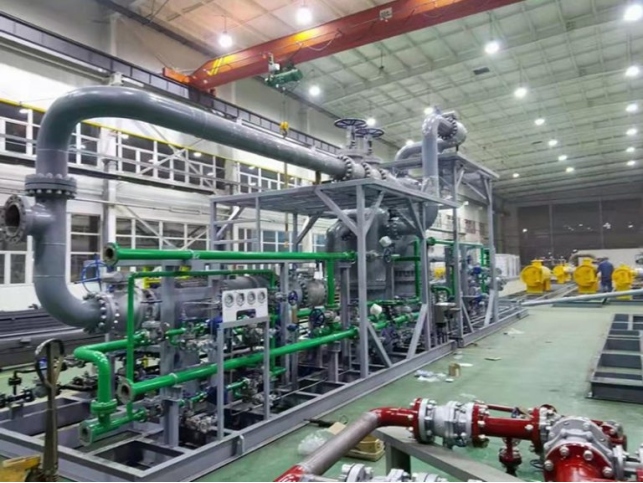
A skid-mounted LPG vaporization system converts liquid LPG into gaseous fuel through controlled heat transfer, providing the required vaporization capacity and gas flow for industrial applications. Downstream pressure regulation then maintains the required outlet pressure for the fuel gas system. For applications such as boiler start-up, burner ignition, plant start-up, and backup fuel supply, the vaporizer provides a controlled source of LPG vapor from the storage system.
This is important because fuel gas supply interruptions can result from more than burner-related problems. Fuel supply instability can result from insufficient vaporization capacity, pressure fluctuations, insufficient heat-transfer duty or heating-medium capacity, or a mismatch between the vaporizer design and the site’s actual operating conditions. A properly engineered LPG vaporization skid integrates controlled heat transfer, temperature control, pressure regulation, gas-liquid separation, and safety protection within a compact modular package.
Why LPG Vaporization Matters
Reliable Fuel for Start-Up and Ignition
LPG vaporization systems can provide reliable fuel gas for applications such as flare pilot and ignition systems, boiler burner start-up, and auxiliary fuel gas supply. In these applications, the vaporizer serves as a critical component between the liquid LPG storage system and the downstream fuel-gas or ignition system. Insufficient vaporization capacity or unstable operating conditions can result in pressure fluctuations, inadequate gas flow, or interruption of the downstream fuel-gas supply.
Stable Pressure for Industrial Networks
Industrial LPG systems may also use vaporizers to support fuel gas pipeline networks or maintain required gas-side pressure under high-demand conditions. Proper pressure regulation helps maintain the required operating conditions for downstream burners and process equipment. This is why engineers should evaluate vaporization, pressure regulation, instrumentation, and control as an integrated system.
How a Skid-Mounted LPG Vaporization System Works
Heating Methods and Vaporization Capacity
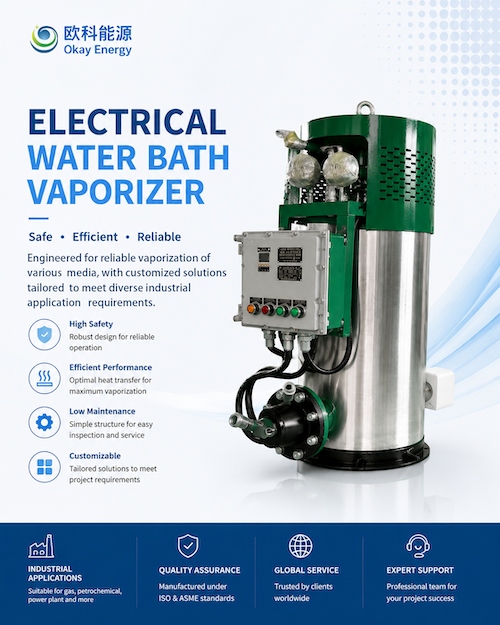
Okay Energy offers LPG vaporization systems using several heating configurations, including electric water-bath, warm-water circulation, steam-heated, steam-water-bath, and direct-heating systems, depending on project requirements.
Pressure Regulation and Outlet Control
LPG vaporization skids can be configured for different inlet and outlet pressure requirements. The actual pressure range depends on the vaporizer design conditions, LPG storage pressure, downstream fuel-gas requirements, pressure-regulation equipment, and applicable project specifications.
Factory Assembly and Field Readiness
A skid-based design makes the setup process much more efficient. The skid dimensions and lifting provisions can be designed to facilitate transportation, lifting, and site installation. Because the package can be factory-assembled and subjected to Factory Acceptance Testing (FAT) before shipment, site installation and commissioning work can be reduced.
Key Technical Parameters for LPG Vaporizer Selection
Vaporization Capacity
Vaporization capacity should be selected based on normal and peak LPG demand rather than average consumption alone.
Heating Method Should Fit the Site
The best heating style depends on the utilities you already have. Electric water-bath vaporizers are suitable for sites where reliable electrical power is available and steam infrastructure is limited. On the other hand, steam-heated or steam-water-bath configurations can be advantageous at facilities with an existing steam utility system and sufficient available steam capacity. Choosing a source that matches your site reduces setup friction and makes daily operation simpler.
Control and Instrumentation Requirements
It should offer steady temperature control, solid pressure regulation, and clean internal piping. It should offer steady temperature control, solid pressure regulation, and clean internal piping. The control interface should provide clear indication of key operating parameters, alarms, interlocks, and equipment status.
Where These Systems Are Used
Plant Start-Up and Boiler Gas Supply
Common applications include plant start-up, boiler fuel-gas supply, flare ignition, industrial heating, and fuel-gas pipeline systems. These jobs require a fast response and steady pressure. The vaporizer must provide sufficient vaporization capacity to meet the required peak gas demand.
Fuel Gas Pipeline Supply and Pressure Support
These systems also help with pipeline replenishment and keeping pressure steady in spherical tanks. In these applications, stable gas flow, pressure control, safety protection, and continuous operation are the primary design considerations.
How to Choose the Right LPG Vaporizer
Determine Normal and Peak LPG Demand
LPG composition should be considered because propane and butane content affects vapor pressure, density, heating value, and vaporization characteristics. Your answer will point you to the right capacity, pressure settings, and heating type. This prevents you from buying a system that is too small or unnecessarily expensive.
Review the Connection and Commissioning Plan
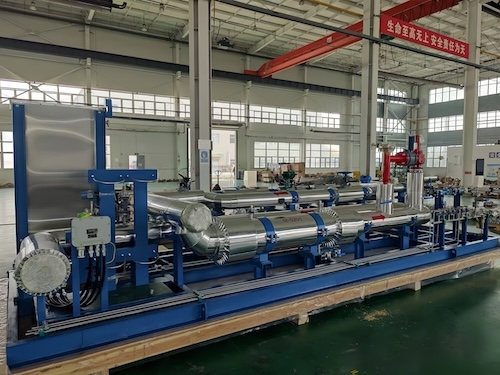
Next, look at the piping, lifting points, and how the unit will be transported. Think about how much assembly should happen at the factory versus your site. A skid-mounted package can reduce field assembly and simplify installation when factory integration and faster site commissioning are project priorities. To see how Okay Energy fits these units into a full equipment lineup, check the product range.
Conclusion
A skid-mounted LPG vaporization system provides a controlled method of converting liquid LPG into fuel gas for industrial applications where natural vaporization capacity is insufficient. Properly specified vaporization capacity and pressure-control equipment can provide a stable LPG fuel-gas supply while reducing unnecessary field installation work. For applications ranging from boiler start-up and flare ignition to industrial fuel-gas pipeline supply, this engineering approach keeps your production lines moving steadily.
To find a system that fits your specific flow rates and goals, look into Okay Energy’s industrial gas solutions.
FAQ
Q: What is a skid-mounted LPG vaporization system?
A: A skid-mounted LPG vaporization system is a packaged assembly that converts liquid LPG into gaseous fuel and can integrate pressure regulation, control valves, instrumentation, safety devices, and PLC controls on a common skid frame. The skid integrates the major equipment, piping, valves, instrumentation, and controls on a common structural frame.
Q: Which applications use LPG vaporization most often?
A: It is mainly used for starting up plants, fueling boilers, and lighting flare pilots. It can also supply fuel gas to industrial pipeline networks and support required gas-side pressure under high-demand conditions. An LPG vaporizer is typically required when the required gas demand exceeds the natural vaporization capacity of the storage vessel, particularly during peak demand, continuous operation, or low ambient-temperature conditions.
Q: Which heating method is best for an LPG vaporizer?
A: The “best” one depends on your site. You can choose from electric-water-bath, hot water, or steam-based systems. Pick the one that uses the utilities you already have available to keep costs and maintenance low.