
In order to supply a refinery fuel-gas system and a 40,000 m³ sphere tank with LPG vaporizer capacity of 10,000 kg/h continuous operation, constant heat input and changing load, a skid is required as opposed to just nameplate capacity. Several key process parameters must be established before issuing a tender for a high-flow skid. This article also outlines Okay Energy’s experience with high-capacity LPG vaporizer skids detailed.
Where a High-Flow LPG Vaporizer Skid Is Used
A high-flow vaporizer for liquid LPG stored in bulk is a base load unit which continuously produces sufficient fuel gas for a process to run. Such units are used for fuel gas supply to a pipeline network of furnaces, boilers and power plants as well as for pressure maintenance of large LPG or mixed-LPG spheres. While start-up and base-load services have different operating profiles, both must be designed against the required flow, heat duty and process conditions.
The vaporizer output is mixed with other fuel gas and then measured out to the consumers in a fuel-gas system. In a sphere-tank case, liquid LPG may be vaporized as required to help keep the tank pressure within a certain band. The design basis differs from a fuel-gas supply system and should be checked against the actual pressure-maintenance duty and corresponding control requirements.
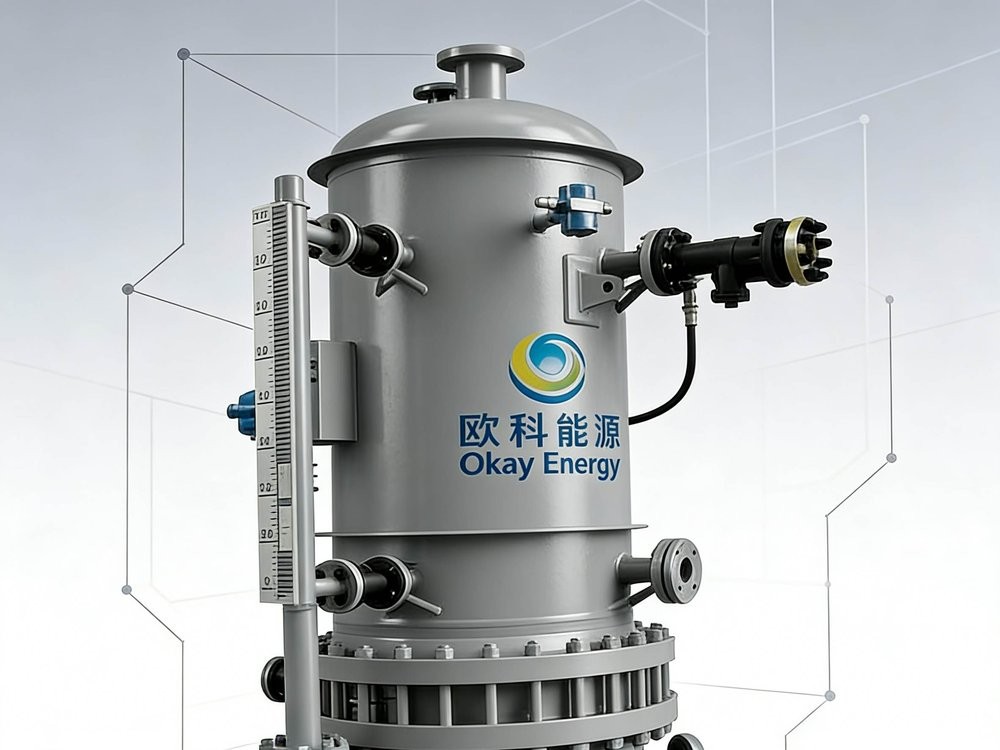
Sizing from 8,000 to 25,000 kg/h
Okay Energy builds large LPG vaporisation plants up to 25,000 kg/h, type steam heated. For designing vaporisers the following parameters are to be fixed for a given real gas load: design conditions for ambient, outlet pressure and heat source; then the required heat duty can be checked against the required surface area of the vaporiser.
Two Working Ranges (8,000–15,000 and Above 15,000 kg/h)
Small sized LPG installations up to 15,000 kg/h are often supplied as a single skid including storage, vaporisation and control. Larger installations may be supplied as parallel trains to meet the required duty and back up. For example, two 25,000 kg/h trains may be supplied where this capacity and redundancy are required, enabling one train to be taken out of service for maintenance etc whilst the other continues to operate. A sphere-tank station should be designed to meet the actual vaporisation duty as opposed to the tank capacity.
Why Peak Duty, Not Average Load
Fuel-gas pipelines operate with a base load and a peak load. The vaporizer must be able to transport the peak load without starving the pipeline. The greatest error in the planning of these kinds of projects is to plan on the basis of average flow. The first number the customer comes up with for the skid is accepted and the margin is discovered after the heaters have been commissioned and connected and the line pressure drops on a hot-load day.
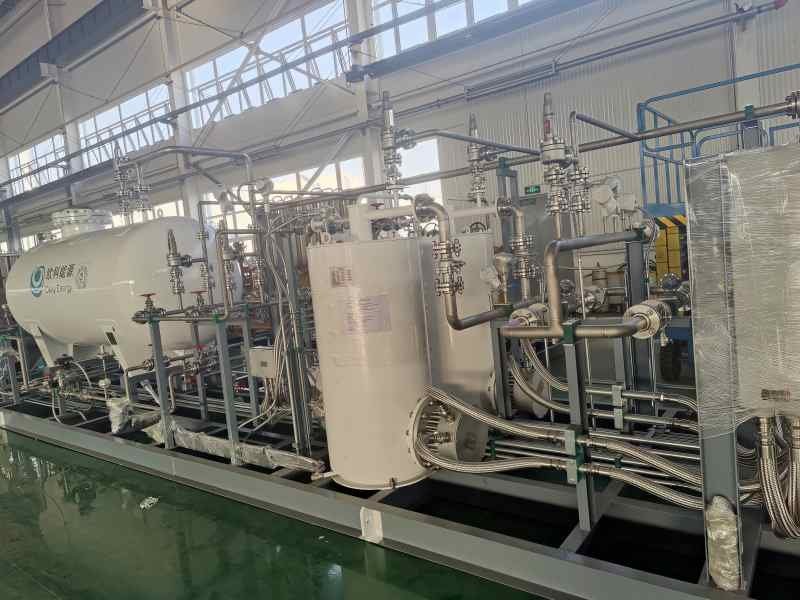
Steam Heating for a Continuous Duty
The heating medium for such high mass flow rates can be supplied as process steam. By using steam heating, high quantities of constant heat are put into a process on continuous operation basis, if sufficient steam is available. For a continuous fuel-gas service this could be an option.
Sizing the Steam Side
When sizing a heat exchanger, the steam side must be sized at the same peak gas load as the process side. A unit with limited steam capacity may meet the required flow under favorable conditions but drop off as the inlet temperature falls or the gas load increases. Sizing the steam supply, steam trap, condensate line and control valve as part of the check for the process side is important – these items are not after thoughts.
Steam vs Electric and Hot Water at This Range
For smaller duty, electric or hot-water heating may be suitable. For large continuous duty where sufficient refinery process steam is available, steam heating is often an attractive option. Where no process steam is available, water-bath or direct-fired heating may be specified as a separate package item, and not as a trim option on a steam-heated unit.
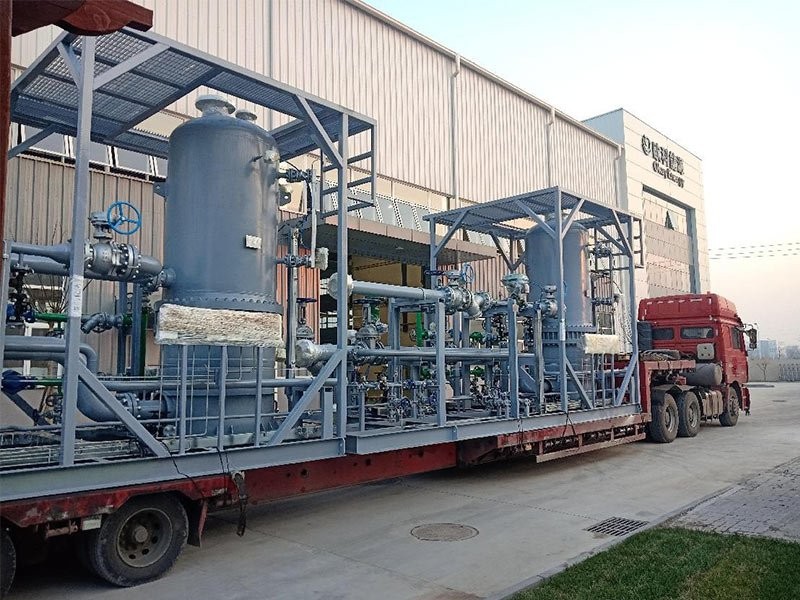
Keeping Liquid Out of the Fuel Gas
Controlling a vaporizer that is fed with liquid LPG and supplies the resulting vaporized gas to a fuel gas line is a control problem and not just a vaporization problem. Carryover of liquid can lead to problems in the fuel gas headers, mixers and burners and turn up as problems with flame instability, lower pressure or even a shut down of plants supplied by this vaporizer.
Vaporizer Area and the Gas-Liquid Separator
Two important measures help keep the line dry. First, it is required to ensure that there is adequate vaporizer surface to handle peak demand and vaporize the liquid in full, without depending on partial vaporization. Second, the gas-liquid separator needs to be of sufficient size to hold the required inventory, while vaporized gas passes through it. A warm-up or feed surge could otherwise cause unvaporized liquid to flow through the line. This is particularly important on fuel gas systems and must have been specifically specified as opposed to being assumed.
Project References
For this capacity range we have supplied high-flow steam-heated LPG vaporizer projects of this size up to 25,000 kg/h. Specific project references, customer names and capacities can be provided where applicable. The gas-liquid separator is sized for the particular operating conditions and not from the nameplate capacity of the vaporizer.
The reference points for the high-flow range are given here. New plant units are sized for their individual peak load, ambient, pressure and heating medium, but within these boundaries the same range and same approach are used.
Why Okay Energy Builds the Vaporizer as a Complete Skid
The gas-vaporization equipment manufactured by Okay Energy is supplied as a complete package including vaporizer, gas-liquid separator and other steam-side equipment plus control system and PLC as one complete unit delivered as a fully tested and inspected skid. This is supplied as a complete and tested unit from the factory, all matched and supplied as a single complete unit prior to delivery and not supplied and matched on site with the vaporizer having been designed as a paper design as opposed to a real design.
OKAY ENERGY TECHNOLOGY CO.,LTD is a national high-tech enterprise,possessing ISO9001,ISO14001,Occupational Health & Safety Management System etc.certifications,more than 60 patents,its projects mainly served to the domestic market and oversea markets,OKAY designs the high-flow projects conducted in the domestic markets and for export by the same design team.
Conclusion
A high-flow LPG vaporizer can be sized around a few key points, including peak vs. average gas flow, steam side sized to peak, and sufficient separation to prevent any liquid in the fuel gas. A fuel-gas pipeline or a large sphere tank would be sized on peak duty and separation. For a new high-flow skid, design around peak gas flow in kg/h, design ambient °C, outlet pressure in MPa, and available steam. Provide vaporizer, steam side and separator as a single package and configure to meet this one design load.
FAQ
Q: What flow range does a high-flow LPG vaporizer skid cover?
LPG vaporization plants of large size are supplied by Okay Energy in capacities up to 25,000 kg/h for high-flow steam-heated applications. Larger capacities may be delivered in parallel trains depending on required duty and availability.
Q: How is a fuel-gas vaporizer sized?
A: The proper basis for sizing a pipeline or process is the peak gas flow rate. Develop a realistic peak load. Then design the ambient conditions, outlet pressure, heat medium, and calculate the heat duty as a function of vaporizer area. The average flow rate will result in low line pressure on hot load days.
Q: Why is steam the usual heating method at this range?
A) Steam heating is often cost effective for large continuous use applications where adequate process steam is available. Refineries are usually filled with process steam which can be easily connected to a steam-heated solution. Where no process steam is available a water-bath or a direct-fired solution would normally be specified as a separate item.
Q: How do you stop liquid from reaching the fuel gas?
A) Sufficient vaporizer area to meet peak demand to ensure complete vaporization of the liquid. B) Sufficiently sized gas-liquid separator to hold liquid inventory and allow gas to pass. The gas-liquid separator, in a fuel-gas system, is a critical additional item to prevent any liquid carryover and must be specified.