
Urban gas grids are under strain to supply burgeoning energy needs, especially at seasonal peaks or in the event of unplanned supply outages. Conventional natural gas pipelines by themselves may not always ensure a consistent supply, especially to fast-developing suburban enclaves or satellite cities. In response to these issues, LPG blending with air has become the viable, economical answer to urban energy management.
At Okay Energy, we specialize in industrial energy solutions, delivering state-of-the-art equipment and turnkey projects that enable LPG blending with air to be a dependable part of contemporary urban gas systems. With our LPG Vaporization (Gasification) systems, Industrial Gas Blending Control and Management solutions, and large-scale engineering services, cities can streamline energy distribution, maintain safety, and enhance gas network coverage cost-effectively.
Benefits of LPG Blending
Peak Shaving
Peak shaving—leveling out abrupt spikes in energy demand—is likely the foremost single reason why LPG blending with air is prevalent in urban gas grids. In cold winter periods, domestic and commercial gas demand can increase exponentially and tend to overburden local infrastructure. The injection of LPG as a supplementary fuel enables urban gas grids to keep up supply without the installation of expensive new pipelines. Okay Energy’s Industrial Gas Blending Control and Management system can dynamically manage the ratio of LPG-to-air, maintaining constant energy content and de-stressing the main gas grid. In this way, the urban operators can meet peak demand in a flexible and economic way.
Emergency Backup Supply
LPG blending also offers a reliable emergency backup for city gas grids. Natural gas supply can be disrupted by maintenance, accidents, or pipeline limitations. With LPG mixed with air, cities can ensure an uninterrupted energy supply to residential areas, industry, and commercial centers. Our LPG Vaporization (Gasification) units are intended for quick deployment, transforming stored LPG into a safe, usable gas mixture. Our systems minimize city user disruption during crises to maximize possible energy security.
Infrastructure Efficiency
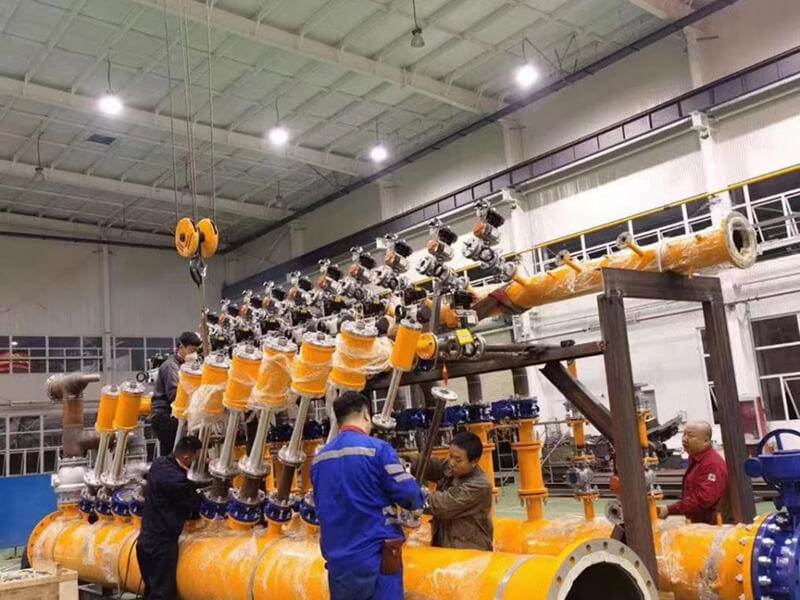
Expansion of gas networks to newly built suburban clusters or satellite towns can be costly and time-consuming. Blending LPG with air enables expansion of gas services in cities at reduced infrastructure investment with equal energy supply reliability. Through Okay Energy’s modular Industrial Gas Blending plants, operators can easily install skid-mounted systems with minimal integration into the existing networks. The solution allows for fast connection of under-served areas, bringing clean energy to homes and businesses without requiring the construction of large pipes.
How LPG Blending Works
Technical Overview
LPG blending is the process of mixing liquefied petroleum gas with air in controlled proportions to produce a combustible gas mixture that is ideal for distribution in urban areas. A stable calorific value is essential to facilitate safe and efficient combustion in domestic and industrial use.
Safety Measures
Safety is the top priority in LPG blending operations. Okay Energy incorporates state-of-the-art monitoring and control functions, such as pressure and temperature sensors, leak detection, and real-time alarm systems. Our LPG Vaporization (Gasification) units have several safety redundancies, preventing overpressure and keeping the gas mixture within safe operating limits. All our systems are built and produced according to international safety standards for the assurance of city operators while supplying residential and industrial clients.
Regulatory Compliance
Urban gas networks are tightly controlled regarding gas quality, pressure, and safety. Okay Energy guarantees that our LPG blending and vaporization systems meet local and international codes. From ISO 9001/14001 certification to German standard engineering practices, our equipment is built to accommodate the most stringent regulatory specifications, in support of both efficiency and safety.
Applications in Urban Gas Networks
Seasonal and Peak Management
Seasonal variations in demand could make a big difference to gas distribution networks. Blending of LPG permits urban operators to dynamically regulate supply, maintain energy levels during peak times, and reduce storage expenses. Okay Energy’s Industrial Gas Blending Control technology empowers operators to plan blending strategies in advance of predicted demand. Planning in this way averts shortages and guarantees energy security in the face of seasonal variations.
Industrial and Commercial Application
City industries frequently need adaptable gas supply systems to deal with changing production timetables. LPG blending offers a steady and multipurpose fuel supply to factories, chemical plants, and business complexes. Our LPG Vaporization systems give assistance for high-limit industrial activities, gas quality, and calorific value being guaranteed even at top load. With inherent checking and control, administrators can streamline energy utilization, limit downtime, and keep up production.
Suburban and Satellite Town Supply
Most satellite towns and suburbs are not covered by the main natural gas pipelines because of the prohibitive cost of infrastructure. Blending LPG with air enables energy utilities to reach these locations incredibly quickly. For instance, Okay Energy’s skid-mounted blending facilities have been utilized in several projects where quick expansion was required. They enable a stable gas supply without laying costly new pipelines, decreasing project duration and capital outlay correspondingly.
Advantages Over Alternatives
Compared to natural gas pipeline expansion or exclusive dependence on imported LNG, LPG blending has the following benefits:
- Economical: Reduced infrastructure expenses and quicker rollout.
- Flexibility: Simple curtailment of supply to balance demand variability.
- Scalability: Modular equipment allows staged network growth.
- Reliability: Backup supply during emergencies enhances city energy security.
By adopting Okay Energy solutions, cities have access to proven, scalable, and cost-effective technologies that enhance both near-term operational performance and long-term urban energy resilience.
Okay Energy Solutions in Practice
Okay Energy has deployed LPG blending projects in various cities. Our turnkey solutions combine LPG Vaporization (Gasification), Industrial Gas Blending, and Natural Gas Pressure Regulation & Metering systems to streamline urban gas grids. A case in point was a suburban gas project in which vaporization units were matched with skid-mounted blending modules to provide more than 50,000 households with stable gas in peak winter months. Pipeline expansion cost was cut by 40% with continuous service to residents.
FAQ
Q: What is LPG blending with air?
A: LPG-air mixing refers to the blending of liquefied petroleum gas with air to produce a gas mixture that can be distributed in city grids. It is a secure energy supply and makes network expansion economically viable.
Q: Why is LPG blending prevalent in cities?
A: Cities experience peak winter demand and brief supply interruption. LPG blending flattens these peaks, offers emergency backup, and extends gas supply to locations out of pipeline range.
Q: Is LPG blending safe for home use?
A: Yes. Okay Energy equipment, such as LPG Vaporization (Gasification) units and Industrial Gas Blending systems, features state-of-the-art monitoring and safety controls to eliminate leaks and overpressure for safe home and industrial use.
Q: In what way does LPG blending increase infrastructure?
A: Through the utilization of modular blending units, suburbs and satellite towns can be supplied by cities without the construction of large pipelines. This method lowers infrastructure expenses and brings quicker service availability.
Q: Is it possible for LPG blending to cater to industrial energy requirements?
A: Yes. LPG blending offers a flexible, dependable source of fuel for factories, commercial complexes, and chemical plants, enabling operators to modulate supply based on operational requirements.