
A CNG pressure reducing skid may experience low-temperature operation, icing, or outlet pressure loss when a large pressure drop causes significant gas cooling and the system does not provide sufficient heat input or gas conditioning. Other causes of outlet pressure loss include low inlet pressure, excessive flow demand, filter differential pressure, regulator capacity limitations, and control-system problems. Effective troubleshooting should examine the complete gas supply system rather than treating every pressure problem as a regulator failure.
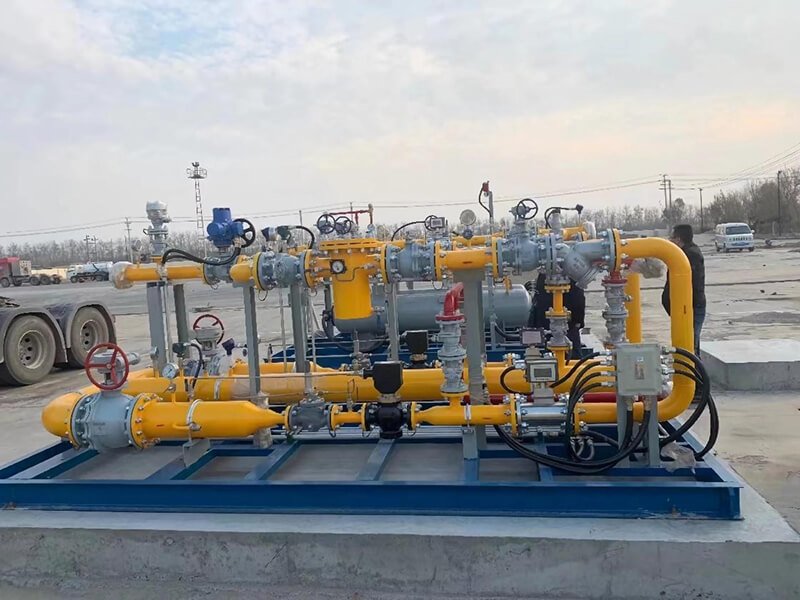
Why CNG Pressure Reduction Causes Gas Cooling
CNG transported by tube trailers is stored at high pressure and must be reduced before it can enter industrial boilers, burners, process equipment, or distribution networks. Okay Energy’s CNG Pressure Reducing Device is designed around multi-stage pressure regulation for this purpose.
When natural gas undergoes throttling across a pressure regulator or control valve, the associated pressure drop can produce a temperature reduction due to the Joule–Thomson effect. The pressure reduction determines the required temperature control across the regulating stages, while gas flow rate directly affects the required heater duty. Under otherwise similar operating conditions, a larger pressure drop can increase the temperature reduction across the regulating stage, while higher flow rates increase the required heating duty.
Low temperature alone does not always mean equipment will freeze. Problems become more likely when low temperature combines with moisture or liquid contamination. Water can contribute to icing or hydrate formation around valves and regulating components, restricting gas flow and affecting downstream pressure.

CNG Freezing and Pressure Drop: Symptoms and Likely Causes
Different symptoms often point to different parts of the system.
| Symptom | Likely Areas to Check |
| Pressure drops only during high demand | Peak flow, minimum inlet pressure, regulator capacity |
| Pressure falls as a trailer empties | Declining CNG inlet pressure |
| Regulator or piping develops ice | Low gas temperature, water content, insufficient heating |
| Flow gradually decreases | Filter ΔP, icing, declining inlet pressure |
| Outlet pressure fluctuates | Regulator, control valve, transmitter, or inlet-pressure changes |
| Gas temperature remains too low | Insufficient preheating or excessive heating duty |
The important point is that CNG pressure drop is a system symptom, not a diagnosis.
6 Common Causes of CNG Freezing and Pressure Loss
Insufficient Preheating
Pressure reduction can create a significant temperature drop. If the heating system was selected for a lower flow or different inlet pressure than the actual operating condition, gas may reach the regulating stages at an inadequate temperature.
Preheating duty should therefore be reviewed against actual flow rate, inlet pressure range, required outlet conditions, and operating schedule. A fixed heater capacity should not be assumed suitable after plant demand changes.
Water, Hydrocarbon Condensate, and Solid Contamination
Gas quality should also be reviewed against the water dew point and hydrocarbon dew point, particularly where low-temperature operation is expected. Okay Energy can integrate equipment such as the Vertical Filter Separator or Two-Stage Filtration System (Cyclone + Precision Filter) into gas treatment packages. The latter combines cyclone separation for bulk particles and liquid droplets with precision filtration for finer impurities.
Proper gas filtration and liquid separation help protect downstream regulators, control valves, metering equipment, and instrumentation from particulate contamination and liquid carryover.
Falling CNG Inlet Pressure
As CNG is discharged from a tube trailer, the available pressure at the skid inlet generally decreases. The actual pressure available to the skid depends on trailer conditions, gas temperature, isolation valves, connecting hoses/piping, and flow demand.
If the actual skid inlet pressure falls below the minimum inlet pressure required to maintain the specified outlet pressure at the required flow rate, the regulator may no longer maintain the required downstream pressure at the design flow rate. Operators should therefore compare inlet and outlet pressure trends before assuming that the pressure regulator itself has failed.
Peak Demand Above Design Flow
Normal consumption and peak gas demand are not always the same.
A boiler startup, production-line restart, additional burner, or several users operating simultaneously can increase flow above the original design condition. The skid should be checked against normal flow, maximum/peak flow, minimum inlet pressure, required outlet pressure, and regulator capacity—not average consumption alone.
Filter Restriction or Excessive Pressure Drop
Filter elements can become fouled as contaminants accumulate, increasing differential pressure and reducing the pressure available to downstream equipment.
A rising differential pressure across the filtration stage can reduce the pressure available to downstream regulators. Okay Energy’s Two-Stage Filtration System (Cyclone + Precision Filter) can also be configured with differential-pressure monitoring and automatic condensate drainage according to project requirements.
Regulator, Valve, or Control Problems
After gas supply, temperature, filtration, and flow conditions have been checked, inspect the regulating and control equipment.
The Pressure Regulator & Shut-off Valve provides pressure regulation together with automatic safety shut-off functionality. Check regulator setpoints, sensing lines, pilot components where applicable, slam-shut valve status, control-valve position feedback, transmitter calibration, and PLC alarms.
CNG Pressure Drop Troubleshooting: What to Check First
A structured diagnosis can prevent unnecessary component replacement.
Step 1: Compare Inlet and Outlet Pressure
Record and trend inlet and outlet pressure under both normal and abnormal operating conditions. If inlet pressure is already declining significantly, investigate the gas source and trailer condition first.
Step 2: Check Gas Temperature
Measure temperature before and after major pressure-reduction stages. Abnormally low temperatures can indicate that heating duty is insufficient for the current flow and pressure conditions.
Step 3: Check Filter Differential Pressure
Inspect filter status and condensate accumulation. Excessive filter differential pressure (ΔP) indicates filter fouling, liquid accumulation, or other upstream restrictions that may be limiting gas flow.
Step 4: Compare Actual Flow With Design Flow
Determine whether current Nm³/h demand exceeds the original design basis, particularly during startup or production peaks.
Step 5: Inspect for Moisture or Icing
Inspect regulators, valves, piping, filters, and drainage points for icing, condensate, or contamination, and verify the associated gas and surface temperatures.
Step 6: Check Regulator and Control Signals
Review pressure setpoints, transmitter calibration, sensing-line condition, valve response, alarm history, and PLC data. Diagnosis should distinguish an instrumentation problem from a process-condition problem.
How to Prevent CNG Regulator Freezing and Pressure Loss
Prevention starts with matching the system to real operating conditions.
Provide adequate preheating based on pressure reduction and gas flow rather than relying on a fixed temperature assumption. Use appropriate filtration and separation to reduce liquid and particulate carryover. Where project conditions require it, staged pressure regulation can help manage large pressure changes.
Pressure, temperature, and flow should also be monitored together. Okay Energy’s product portfolio includes Pressure Transmitter, Temperature Transmitter, Gas Turbine Flow Meter, Ultrasonic Flowmeter, and Mass Flowmeter options that can be incorporated into integrated gas systems according to project requirements.
Malaysia 3500 Nm³/h CNG Pressure Regulating Skid Case Study
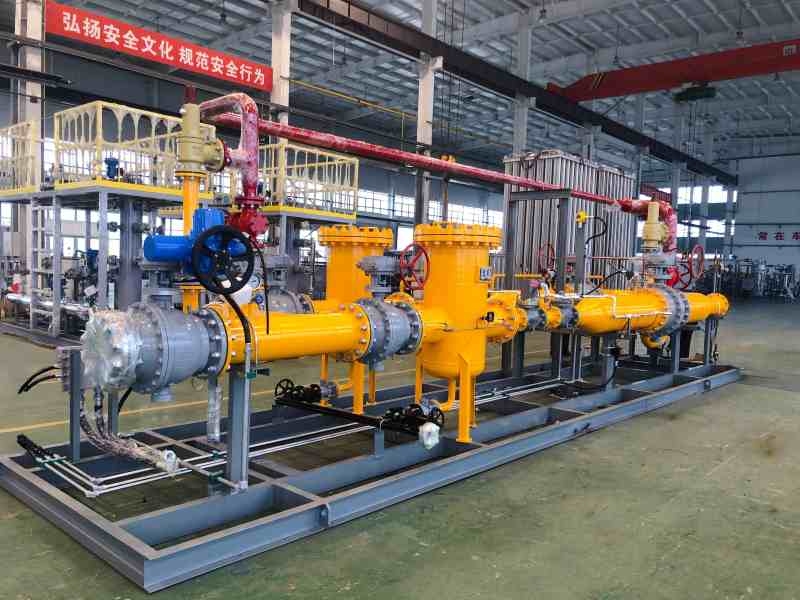
A practical example is our Malaysia industrial CNG project. We delivered a 3500 Nm³/h CNG Pressure Regulating Skid System for an industrial user located without direct natural gas pipeline access. CNG supplied by tube trailers was reduced, regulated, metered, and delivered to downstream industrial users.
The skid-mounted package integrated a CNG pressure reduction unit, multi-stage regulation, gas heating, filtration, safety shut-off, pressure-control valves, flow metering, PLC control, and skid piping. The equipment was factory assembled and tested before shipment.
This project demonstrates why reliable CNG pressure reduction depends on thermal management, filtration, pressure regulation, metering, and control working as one system, rather than on the pressure regulator alone.
When Should the CNG Pressure Reducing Skid Be Reassessed?
Repeated freezing or pressure loss may indicate that operating conditions have moved beyond the original hydraulic, thermal, or equipment design basis.
A capacity reassessment, hydraulic/thermal review, or skid resizing may be required when production capacity has increased, additional boilers or burners have been installed, peak gas consumption has risen, the CNG supply source has changed, or required outlet pressure has been modified.
At Okay Energy, we provide modular skid-mounted industrial gas equipment and engineering services covering CNG pressure reduction, natural gas regulation and metering, LNG/LPG vaporization, and related gas applications. Our service scope includes equipment engineering, manufacturing, installation and commissioning support, and technical services.
CNG Pressure Reducing Skid Design Checklist
Before selecting or reviewing a system, prepare the following data:
- CNG inlet pressure range
- Required outlet pressure
- Normal and maximum gas flow
- Gas composition and quality
- Inlet gas temperature
- Site ambient temperature
- Daily operating hours
- Available heating utility
- Required filtration
- Metering requirements
- Control and safety requirements
- Future capacity expansion
These inputs provide a much stronger basis for equipment selection than flow rate alone.
Conclusion
At Okay Energy, we design and manufacture CNG Pressure Reducing Device solutions and modular CNG pressure-regulating skids for industrial gas supply. Our systems can integrate pressure reduction, heating, filtration, metering, safety shut-off, and PLC control according to project requirements.
If your CNG system experiences freezing, unstable outlet pressure, or insufficient gas flow, contact Okay Energy with your inlet pressure range, required outlet pressure, normal and peak flow, operating schedule, and site conditions. We can use these project parameters to discuss a more suitable CNG pressure-reduction configuration.
FAQ
Q: Why does a CNG regulator freeze during pressure reduction?
A:High-pressure natural gas can cool significantly as pressure is reduced. When this low temperature combines with moisture or liquid contamination, icing or hydrate formation may occur around regulating components. Preheating, filtration, gas conditioning, and appropriate pressure-reduction design should therefore be evaluated together.
Q: Why does CNG outlet pressure drop when gas demand increases?
A:Possible causes include falling inlet pressure, peak flow above the design capacity, filter restriction, inadequate heating, or regulator and control limitations. Checking inlet pressure, temperature, differential pressure, and actual gas flow helps identify the source.
Q: What information is needed to size a CNG pressure reducing skid?
A: The main inputs include inlet pressure range, required outlet pressure, normal and peak flow, gas conditions, operating hours, site temperature, heating availability, filtration requirements, metering, controls, and redundancy expectations.