
An LNG Satellite Station stores cryogenic liquefied natural gas in vacuum-insulated LNG storage tanks and supplies natural gas through LNG vaporization, pressure regulation, metering, and control systems. It turns this liquid back into gas using vaporization. The system also manages the gas flow through pressure regulation, metering, and PLC monitoring. This integrated system can provide reliable gas supply for industrial consumers, residential users, commercial facilities, and urban gas distribution networks.
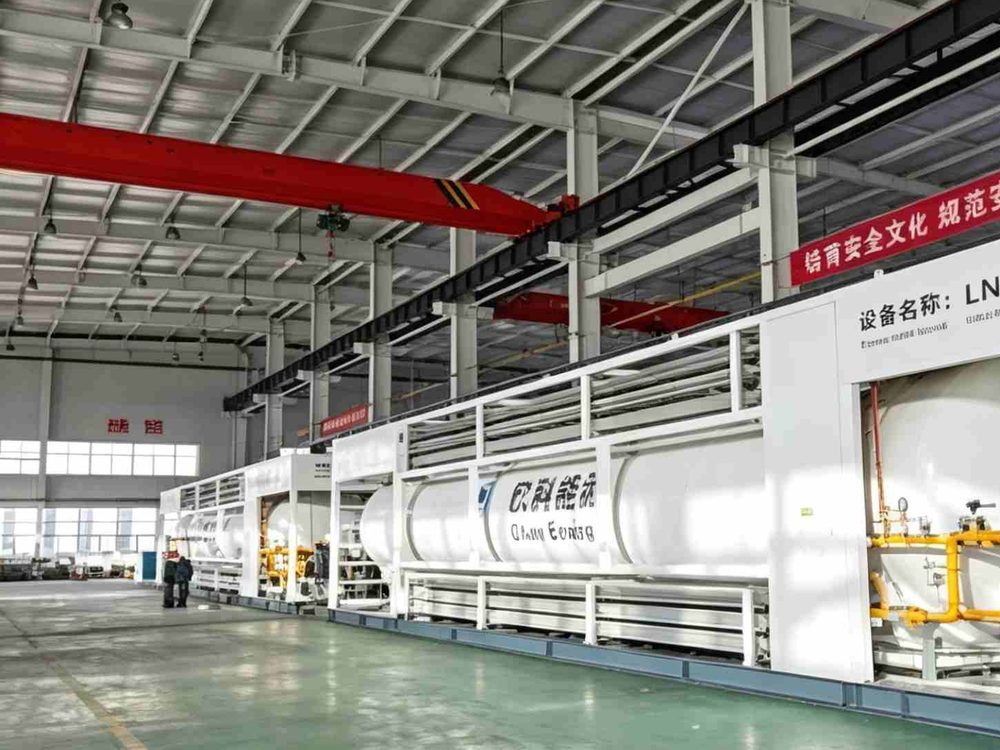
Why LNG Satellite Stations Matter for Flexible Gas Supply
Off-Grid Industrial Gas Demand
Not every factory, building site, or mine has access to a gas pipeline. An LNG satellite station works as a local hub. LNG arrives by truck and stays in onsite storage. The system then vaporizes and regulates the fuel before sending it into the local network. This configuration is well suited to facilities that require a reliable natural gas supply without access to a pipeline network.
Emergency Backup and Peak Shaving
Natural gas demand can vary significantly according to seasonal conditions, production schedules, and peak-load requirements. Very cold weather or pipeline repairs can leave users without enough fuel. LNG peak-shaving facilities can supplement pipeline gas supply during periods of peak demand, supply constraints, or temporary pipeline outages. They maintain an LNG inventory that can be vaporized and supplied during peak-demand periods or supply interruptions. When the main network struggles to keep up, these stations release extra gas to fill the gap.
For larger peak-shaving applications, storage volume and vaporization capacity can be configured according to peak demand, required backup duration, LNG delivery logistics, and site conditions. Engineers can adjust these specs for each project. These systems can support urban gas emergency-response strategies, peak-load management, and continuity of supply for industrial users.
How an LNG Satellite Station Works
LNG Storage and Ambient Air Vaporization
The LNG supply process begins with storage in a vacuum-insulated cryogenic LNG storage tank. The LNG is stored in a vacuum-insulated cryogenic storage tank designed to minimize heat ingress and maintain LNG in its cryogenic liquid state. When natural gas demand increases, LNG is withdrawn from storage and routed to the vaporization system for regasification. The ambient air vaporizer transfers sensible heat from the surrounding air to the cryogenic LNG through an extended-surface heat exchanger, enabling LNG vaporization without external electrical or steam heating. Because the vaporizer uses heat from ambient air, no external combustion heater or primary electrical heating source is required for the vaporization process.
Choosing the right vaporizer depends on your flow rates and local weather. For lower-capacity LNG satellite stations, vaporization capacity may fall within the 50–500 Nm³/h range, subject to project-specific design requirements. Larger peak shaving jobs might need a bigger modular design. Equipment sizing should consider peak gas demand, required vaporization capacity, peak duration, LNG storage inventory, and the required recovery or refill time.
Pressure Regulation, Metering, and PLC Control
LNG vaporization is only one stage of the gas supply process. Once the LNG is a gas, the pressure regulation system reduces and controls the vaporized natural gas to the required downstream operating pressure. The metering system measures gas flow for operational monitoring, gas accounting, and, where applicable, custody-transfer applications. The required outlet pressure is project-specific and may be configured according to downstream gas network and end-user requirements.
The PLC-based control system continuously monitors key operating parameters, including pressure, temperature, flow, and equipment status. It reads data from pressure and temperature sensors. This enables operators to monitor station operating status and respond to abnormal operating conditions. The control system can provide alarm annunciation, interlocks, shutdown functions, and optional remote monitoring for abnormal operating conditions. Integrating storage, vaporization, pressure regulation, metering, and PLC control into a modular package can simplify system integration and site installation.
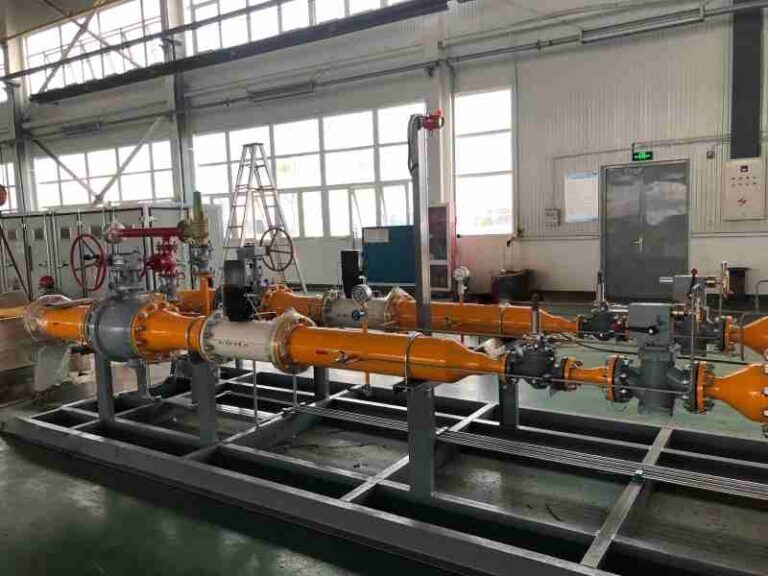
Technical Features of Okay Energy LNG Systems
Capacity and Pressure Matching
Getting the pressure right is critical for safety and performance. For some Okay Energy LNG configurations, the LNG-side operating pressure may be within the 0.6–0.8 MPa range; the final design pressure and operating pressure are determined by the storage tank, vaporization system, and downstream requirements.
Skid-Mounted Installation and Transport
Skid-mounted systems integrate major process equipment, piping, valves, instrumentation, and control components on a structural steel skid frame. Skid-mounted construction facilitates factory assembly, transportation, site installation, and modular system integration, subject to project-specific transport and lifting requirements. The skid can be configured with factory-fabricated piping connections and designated lifting points to facilitate site installation. Since much of the assembly happens in a factory, there is less work to do at your site. This can reduce the amount of field assembly and site construction work, potentially shortening installation time and improving project execution efficiency.
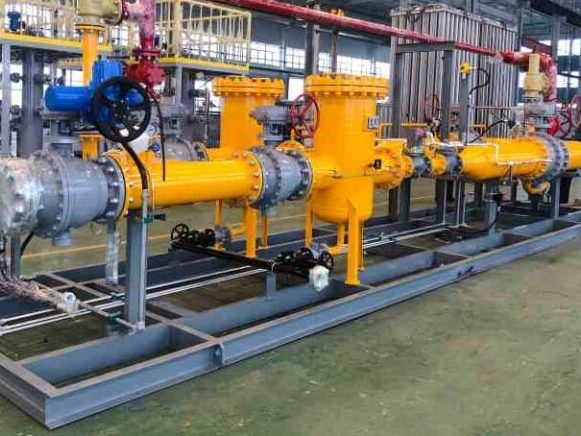
Typical LNG Satellite Station Applications
Temporary Industrial and Civil Gas Supply
A skid-mounted LNG storage and vaporization system can be well suited to temporary or rapidly deployable gas supply applications. Factories often use them while waiting for a permanent pipe connection. They are also great for housing projects in new areas. Because the storage, vaporizer, and meters are all in one package, it is very simple to deploy and start using quickly.
Real-world projects include supplying gas for industrial kitchens, heating for residential blocks, and power for remote mines. The goal is always the same: to provide gas that is ready to use immediately. An LNG satellite station must be designed not only for LNG storage, but also for controlled vaporization, pressure regulation, flow measurement, and reliable downstream gas delivery.
Urban Peak Shaving and Pipeline Backup
City gas companies use these stations as a backup. LNG peak shaving facilities store LNG in advance and supply vaporized natural gas during periods of peak demand, pipeline constraints, or supply interruptions. When demand spikes or when a main pipe needs repairs, they turn the LNG back into gas. This can help maintain continuity of gas supply to residential and commercial consumers during peak-demand periods or upstream supply interruptions.
How to Choose the Right LNG Gasification System
Define Flow Rate and Outlet Pressure
You should start by looking at your lowest and highest gas needs. Check the pressure your equipment requires and how many hours a day you will run the system. These facts help you pick the right tank size and vaporizer capacity. You also need to decide if the station is for daily use or just for emergencies.
Remember that one model does not fit every site. For applications requiring higher availability, a duty/standby or dual-train pressure regulation system may be configured to provide operational redundancy and facilitate maintenance without interrupting gas supply. A duty/standby or dual-train configuration can provide redundancy, allowing the standby train to maintain gas supply during maintenance or certain equipment failures.
Review Site Layout and Operating Conditions
Before equipment selection, the project team should evaluate the site layout and operating environment. The site layout should provide adequate space for LNG tanker access and unloading operations, equipment foundations, skid installation, process piping, maintenance access, emergency access, and required safety separation distances. Think about where the pipes will connect and where the control room will sit. While skid-mounted units are easier to install, you still need a good plan for safety and ventilation to keep the operation running smoothly.
Okay Energy provides full support, from the first design to final training. Their team helps with installation and keeps the machines running with after-sales care. This project support helps ensure that the system is properly installed, commissioned, and configured according to the approved design and operating requirements.
Conclusion
An LNG Satellite Station is a smart way for off-grid sites to get the gas they need. By combining storage, vaporization, and pressure control into one system, it provides a reliable natural gas supply. Whether supplying an urban gas network, industrial facility, commercial user, or remote power-generation site, these stations offer the flexibility and safety required for modern energy needs.
To find an LNG system that fits your specific flow and pressure needs, check out Okay Energy‘s LNG gasification solutions.
FAQ
Q: What is an LNG satellite station?
A: It is a facility that stores liquid natural gas and turns it back into a gas for local use. It integrates LNG storage, vaporization/regasification, pressure regulation, metering, instrumentation, and control systems to supply natural gas to downstream users. It is perfect for areas without pipelines.
Q: What determines LNG vaporization capacity?
A: Capacity is based on how much gas you need at your busiest time. It also depends on your tank size and local weather. Okay Energy offers units ranging from small 50 Nm³/h skids to large 10,000 Nm³/h peak shaving stations.
Q: Can Okay Energy provide a skid-mounted LNG gasification system?
A: Yes. Okay Energy builds skid-mounted stations that include storage, vaporizers, and controls. They offer full project support, including design, setup guidance, and staff training to make sure your system runs correctly.