
An LPG vaporizer converts liquid LPG into a stable vapor supply at the required flow rate, while the downstream pressure-regulating system maintains the delivery pressure needed by consuming equipment. Problems such as excessive frosting, insufficient vaporization capacity, low outlet pressure, or liquid carryover do not necessarily indicate a vaporizer failure. In many cases, these issues are related to improper sizing, insufficient heat input, fluctuating gas demand, ambient conditions, or the design of the pressure-control system.
At Okay Energy, we design and manufacture LPG vaporization equipment and integrated gas supply systems for industrial applications. Our range includes Electric Water Bath Vaporizer, Water Bath Vaporizer, Steam Heated Vaporizer, Air Ambient Vaporizer, and integrated skid-mounted LPG systems, allowing the heating method and system configuration to be matched to actual project requirements.
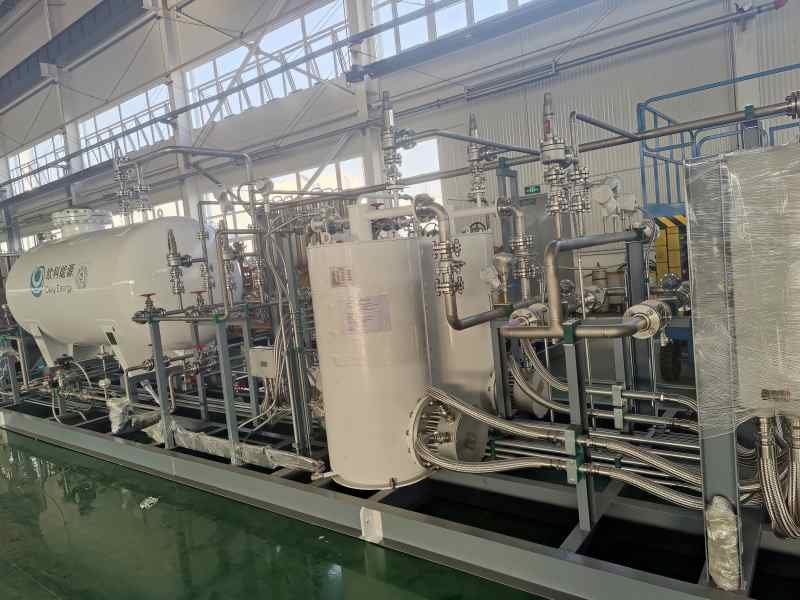
How an LPG Vaporizer Works
LPG is normally stored as a liquid, while boilers, burners, flare ignition systems, and many industrial processes require gas-phase fuel. An LPG vaporizer supplies the heat needed to convert liquid LPG into vapor before it enters downstream pressure regulation and distribution equipment.
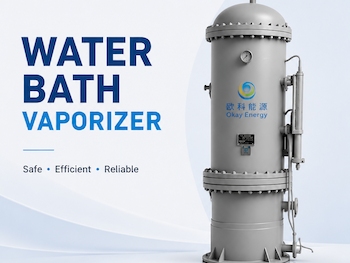
In a Water Bath Vaporizer, liquid LPG passes through heat-exchange coils immersed in temperature-controlled warm water. Okay Energy’s current design uses stainless-steel heat-exchange coils, automatic water-temperature control, and gas-liquid separation to support stable and continuous vaporization.
The key operating question is therefore not simply whether gas is leaving the vaporizer, but whether enough heat is available to vaporize the required LPG flow continuously under actual operating conditions.
Why Does an LPG Vaporizer Freeze or Lose Capacity?
| Symptom | Possible Causes | What to Check |
| Excessive frosting | Low ambient temperature or insufficient heat transfer | Ambient temperature, frost accumulation, vaporization load |
| Low outlet pressure | Insufficient vapor generation or pressure-regulation issue | LPG demand, inlet pressure, regulator setting, piping pressure loss |
| Reduced capacity | Actual demand exceeds effective vaporization capacity | Peak LPG demand, available heat input, duty cycle |
| Liquid carryover | Insufficient vaporization or inadequate liquid separation | Bath temperature, LPG flow, heat input, separator condition |
Low Ambient Temperature and Limited Heat Transfer
In vaporizer troubleshooting, surface frosting on an ambient-air vaporizer should be distinguished from freeze-up affecting valves, regulators, or other flow-control components.
For an ambient air LPG vaporizer, vaporization removes heat from the surrounding air and cools the heat-transfer surface, so frost formation can occur during operation. A certain degree of surface frosting can occur during normal heat transfer and does not by itself indicate equipment malfunction. The greater concern is excessive icing combined with reduced gas output, unstable pressure, or an inability to meet downstream demand.
This is particularly relevant to an Air Ambient Vaporizer, because it obtains heat from surrounding air. When ambient temperature decreases or the required vaporization duty exceeds the available heat-transfer capacity, vaporizer performance can decline. In applications requiring more controlled heat input, a water bath or steam-heated system may be more suitable.
Demand Exceeds LPG Vaporizer Capacity
A common sizing mistake is selecting an LPG vaporizer around average consumption instead of peak simultaneous demand. A plant may consume moderate quantities during normal production but require substantially more LPG during boiler startup, burner ignition, or periods when several process lines operate together.
When actual demand exceeds the effective vaporization capacity under the actual site conditions, gas output can fall and downstream pressure may become unstable. Troubleshooting should therefore compare actual operating demand with the original vaporizer design conditions rather than examining the vaporizer alone.
How to Size an LPG Vaporizer Correctly
LPG vaporizer sizing should start with maximum simultaneous LPG consumption, usually expressed in kg/h. The design should also consider LPG composition, inlet pressure, required outlet pressure, ambient temperature, operating hours, available heating utilities, and expected future changes in demand.
Propane and butane do not have identical vaporization characteristics, so the actual LPG composition matters. Because propane and butane have different vapor-pressure and boiling characteristics, LPG composition should be included in the vaporizer design basis. This is especially important when sizing a propane vaporizer or equipment handling propane-butane mixtures.
Heating utilities are another important selection factor. Where adequate electrical capacity is available, an Electric Water Bath Vaporizer can provide controlled indirect heating. A facility with reliable steam infrastructure may consider a Steam Heated Vaporizer, particularly for large continuous loads. Where the climate and operating duty are suitable, an Air Ambient Vaporizer may be evaluated without an active heating utility. Okay Energy also provides water bath vaporization solutions for continuous industrial gas supply and low-temperature applications.
Capacity margin should reflect load fluctuation, climate, duty cycle, future expansion, and required system availability rather than applying one fixed oversizing percentage to every project.
What Causes Low LPG Vaporizer Outlet Pressure?
Low outlet pressure is often blamed immediately on the regulator, but one of the first checks should be whether the vaporization system is producing sufficient vapor for the current demand. If consumption increases faster than the vaporizer can produce gas, downstream pressure can fall even when the regulator itself is functioning correctly.
Boiler startup, burner load changes, batch heating cycles, or simultaneous operation of multiple consumers can create short-duration increases in gas consumption. Stable pressure therefore depends on coordinated vaporization, regulation, valves, instrumentation, and control.
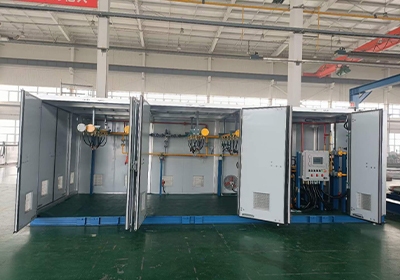
Okay Energy’s Integrated LPG Storage & Vaporizing Unit combines an LPG vaporizer with pneumatic or electric actuated control valves, emergency shut-off valves, a self-operated regulator, and a PLC control system on one skid. This allows vaporization and pressure-control functions to be engineered as one integrated package.
How to Reduce the Risk of Liquid LPG Carryover
Liquid LPG carryover can result from insufficient vaporization, excessive liquid feed, or inadequate liquid-separation and carryover-protection performance. Possible contributing factors include excessive LPG flow, insufficient heating capacity, unstable thermal conditions, or operation beyond the intended vaporizer duty.
Corrective action should be based on the root cause rather than simply increasing the water-bath temperature. Operators should review actual LPG flow, heating capacity, water-bath temperature where applicable, system pressure, and downstream consumption together.
Okay Energy’s Electric Water Bath Vaporizer incorporates gas-liquid separation together with automatic temperature control. The integrated gas-liquid separator provides an additional safeguard by separating entrained liquid before the vapor enters the downstream pipeline, while automatic temperature control helps maintain the thermal conditions required for vaporization.
Which LPG Vaporizer Type Fits the Application?
Electric and Water Bath Vaporizers
The Electric Water Bath Vaporizer is suitable for projects where controlled heating and an appropriate electrical supply are available. Okay Energy’s water bath solutions provide automatic temperature control, while current product configurations also include protection against low water level, excessive temperature, excessive pressure, and emergency operating conditions.
The Water Bath Vaporizer can also be customized around vaporization capacity, working pressure, control system, skid structure, material selection, and power configuration. This makes water bath vaporization useful when a project requires a more controlled heat source than ambient-air vaporization can provide.
Steam Heated Vaporizer
A steam-heated water-bath configuration is suitable where reliable plant steam is already available and continuous vaporization duty is high.
For an industrial fuel-gas pipeline network project in India, Okay Energy supplied a skid-mounted Steam Heated LPG Vaporizer System with a vaporization capacity of 25,000 kg/h. The package incorporated automatic control, safety protection devices, instrumentation, and engineering support for continuous industrial fuel-gas supply.
Air Ambient Vaporizer
An Air Ambient Vaporizer uses heat from surrounding air and therefore does not require electricity or steam as the direct vaporizer heat source. However, its effective performance depends strongly on ambient conditions and operating duty. Climate, peak consumption, and continuous operating time should therefore be considered before selection.
Why Consider a Skid-Mounted LPG Vaporization System?
For a new industrial gas supply project, the LPG vaporizer is only one part of the system. Isolation, emergency shutdown, pressure regulation, instrumentation, controls, and piping interfaces must operate together.
In a Saudi Arabia oil and gas project, Okay Energy supplied a 100 kg/h Electric Water Bath LPG Vaporizer Skid with a working pressure of 0.8 MPa for flare and boiler ignition gas service. The skid incorporated automatic temperature control and was designed to provide stable LPG vaporization and regulated gas delivery.
A factory-integrated skid reduces field assembly interfaces and allows piping, instrumentation, controls, and safety devices to be coordinated before site installation. At Okay Energy, we support LPG projects from solution design and equipment manufacturing through installation, commissioning, personnel training, and after-sales technical service.
Conclusion
Reliable LPG vaporizer performance depends on matching vaporization capacity, available heat, pressure control, and operating conditions to actual gas demand. Excessive frosting or freeze-up, low outlet pressure, insufficient capacity, and liquid carryover should therefore be investigated as system-level issues rather than isolated symptoms.
At Okay Energy, we provide industrial LPG vaporization equipment and integrated skid-mounted solutions configured around capacity, pressure, heating source, site conditions, and downstream requirements.
Contact Okay Energy with your LPG consumption, working pressure, available heating source, and project location to discuss a suitable LPG vaporization solution.
FAQ
Q: How do I determine the correct LPG vaporizer capacity?
A: Start with maximum simultaneous LPG consumption in kg/h rather than average demand. Then consider LPG composition, inlet and outlet pressure, ambient temperature, operating duration, heating source, load variation, and expected future expansion. These factors help determine both the required vaporization capacity and suitable heating method.
Q: Why is my LPG vaporizer outlet pressure too low?
A: Low outlet pressure can result from insufficient vapor generation, sudden increases in downstream demand, inadequate heat input, or pressure-control issues. Check whether the vaporizer can sustain the current LPG load and whether heat transfer remains sufficient before assuming that the pressure regulator is the only problem.
Q: How do I know if my LPG vaporizer is undersized?
A: An undersized LPG vaporizer may struggle to maintain gas supply during peak demand. Common signs include falling outlet pressure, reduced burner performance, excessive frosting on ambient-air units, or incomplete vaporization. Compare the maximum simultaneous LPG demand with the vaporizer’s rated capacity under the actual LPG composition, ambient temperature, pressure, and duty conditions.