
Depending on the gas composition and turbine fuel-gas specification, a natural gas conditioning or pretreatment system may include filtration and liquid separation, pressure regulation, gas heating, metering, instrumentation, and control. Additional treatment such as dehydration or contaminant removal may be required when specified by the gas quality requirements. This preparation helps ensure that the fuel gas meets the pressure, flow, temperature, cleanliness, and gas-quality requirements specified for the gas turbine and the overall fuel-gas system.
A natural gas conditioning station is more than a pressure reduction package. It integrates filtration, liquid separation, pressure regulation, temperature management, metering, instrumentation, and safety functions into a coordinated fuel-gas system.
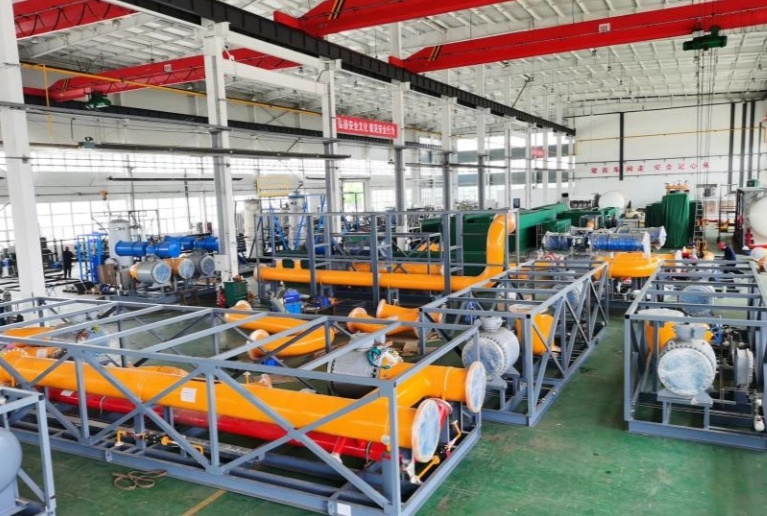
Why Gas Pretreatment Matters Before a Gas Turbine
Managing Inlet Pressure and Flow
Pipeline gas may arrive at a pressure that is too high for a turbine fuel system or may vary as upstream supply conditions change. Natural gas pressure regulation reduces the pressure to an adjustable downstream range and helps keep delivery compatible with the fuel train. The gas metering system measures volumetric or mass flow, depending on the selected metering technology, and provides operating data for process monitoring and control and, when specified, for custody-transfer measurement.
Removal of Solid Particles and Liquid Carryover
The filtration and separation section removes particulate contaminants, entrained liquids, and condensate from the gas stream. Depending on the system design, coalescing filtration may also be used to capture fine liquid aerosols and protect downstream regulators, control valves, meters, and fuel-gas equipment.
Preparing Fuel Gas for Gas Turbine Operation
Gas turbine fuel systems require the fuel gas to meet defined pressure, temperature, particulate and liquid carryover limits, and gas-quality requirements. Depending on the turbine manufacturer’s specification, parameters such as heating value, Wobbe Index, water dew point, hydrocarbon dew point, sulfur content, and contaminant levels may also need to be controlled or monitored.
How a Natural Gas Pretreatment Station Works
Cyclone and Filter Separation
Depending on the gas composition and contaminant load, the filtration section may use a Vertical Filter Separator or a two-stage filtration arrangement combining a cyclone separator with a precision filter. The filtration and separation equipment is typically installed upstream of the pressure regulation and metering sections to protect downstream equipment from particulate contamination and liquid carryover. The final process arrangement depends on the project design.
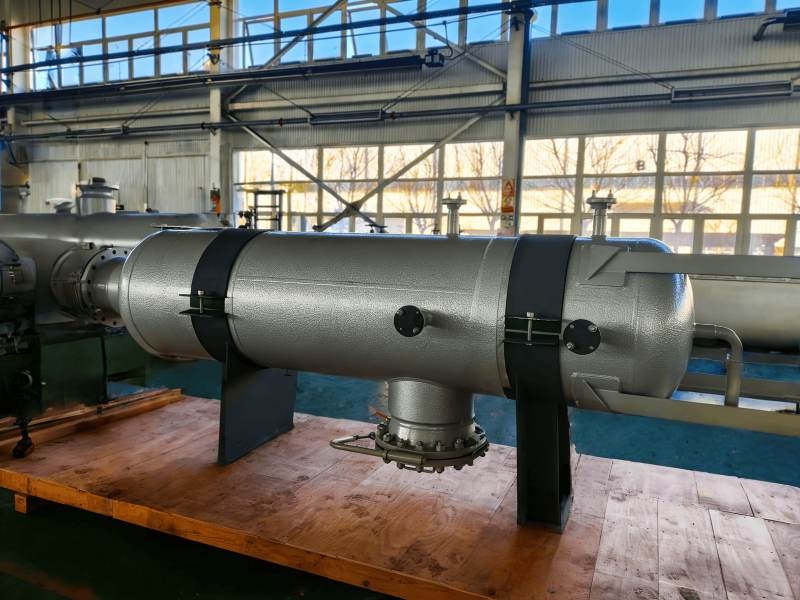
Pressure Regulation and Gas Heating
After filtration, the gas enters the pressure regulation section. A gas heater or heat exchanger may be incorporated when pressure reduction could cause the gas temperature to fall below the specified operating limit.
Metering and PLC Monitoring
The metering section records gas flow for operating visibility and, where applicable, gas accounting. Sensors and transmitters provide pressure, temperature, and flow signals to the PLC-based control system. The PLC can coordinate alarms, status display, interlocks, and automatic operating actions according to the selected configuration, while mechanical protection remains an essential part of the gas train.
Key Design Parameters for Natural Gas Pressure Regulation and Metering
Flow rate, inlet pressure, outlet pressure, gas temperature, and gas composition should be established from the project design basis. Published Okay Energy projects demonstrate different flow and pressure configurations, confirming that the station should be engineered according to the specific application rather than selected from a single universal operating range.
Skid-Mounted Connections and Transport
Pipeline connection sizes and flange ratings are selected according to the project flow rate, operating pressure, applicable piping standards, and site interface requirements. Skid-mounted construction places the major process equipment within a coordinated frame, which can facilitate factory assembly, inspection, pre-commissioning, transportation, and site installation. Final dimensions and lifting requirements still depend on the selected process arrangement.
Applications Beyond Gas Turbine Fuel Supply
City Gate Gas Regulation
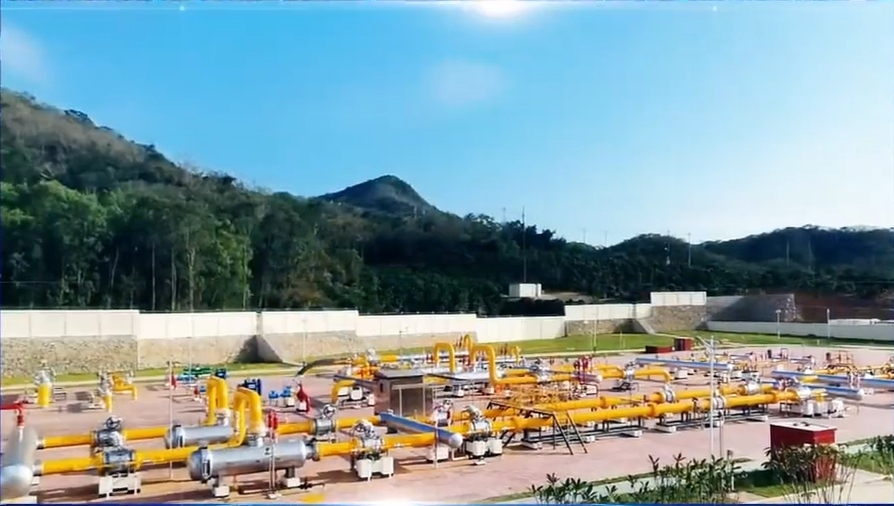
A city gate station receives natural gas from a high-pressure transmission pipeline and reduces the pressure to a controlled level suitable for downstream distribution. The station may combine filtration, pressure regulation, flow metering, instrumentation, and safety functions within a skid-mounted or modular system.
A city gate project in Tanzania has a design flow rate of 800,000 Nm³/h, with an inlet pressure of 5 MPa and an outlet pressure of 2 MPa. These values represent the operating parameters of the referenced project and should not be interpreted as standard ratings for every natural gas pressure regulating and metering station.
Steel Mills and Industrial End Users
Steel mills and other industrial users may require natural gas pressure regulation and metering upstream of furnaces, reheating systems, boilers, and other gas-fired equipment. The required flow rate and outlet pressure should be determined from the connected equipment and the plant’s minimum, normal, and peak gas demand.
Distributed Energy and Pipeline Gas Supply
Okay Energy’s product materials also identify distributed energy, and pipeline gas supply as application directions. For these users, the station should be sized and configured for minimum, normal, and peak gas demand rather than a single nominal flow. The pressure control and monitoring architecture should also reflect whether the station has one operating line, dual paths, or another project-specific arrangement.
Key Design Inputs for a Gas Turbine Fuel Gas System
| Parameter | Why It Matters |
| Gas flow rate | Determines regulator, meter, piping and skid capacity |
| Inlet pressure | Defines pressure reduction requirements |
| Outlet pressure | Must match turbine fuel-gas requirements |
| Gas temperature | Determines heating requirements |
| Gas composition | Affects density, heating value and equipment selection |
| Wobbe Index | Important for combustion-system compatibility |
| Water dew point | Helps assess condensation and hydrate risk |
| Hydrocarbon dew point | Helps control hydrocarbon condensation |
| Liquid carryover | Determines separation requirements |
| Solid contaminants | Determines filtration requirements |
| Metering accuracy | Defines measurement and accounting requirements |
| Control interface | Determines PLC/DCS/ESD integration |
How to Select a Gas Turbine Fuel Conditioning System
Confirm Gas Composition and Demand
Start with the gas composition, heating value, Wobbe Index, inlet pressure, temperature, water and hydrocarbon dew points, contaminant profile, liquid carryover, and required flow rate. Then define the turbine fuel inlet requirements, minimum and peak demand, load-following and ramping requirements, and allowable fuel-gas pressure variation. These inputs determine whether filtration, separation, heating, pressure regulation, flow metering, or additional treatment stages are needed.
Match Regulation, Heating, and Metering
The regulator, heat exchanger, and meter should be selected as one operating chain. A pressure range that appears suitable on paper may still result in an unsuitable gas temperature or inadequate control performance across the required operating range. Regulator sizing, valve turndown, minimum flow, and control-loop requirements should therefore be reviewed together.
Review Control and Service Requirements
The PLC Gas Control System should be aligned with the plant’s alarm, interlock, remote monitoring, and data requirements. Okay Energy‘s support scope includes design, equipment production, installation guidance, commissioning, training, after-sales service, and operational support.
Conclusion
A natural gas pretreatment or fuel-gas conditioning system provides the filtration, separation, pressure regulation, temperature control, metering, instrumentation, and safety functions required to prepare natural gas for gas turbine fuel systems. The final configuration should be based on the gas composition, fuel-gas specification, minimum and maximum flow rates, pressure requirements, temperature limits, and plant control interfaces.
For documented project references and application-specific gas conditioning support, explore Okay Energy to discuss the required operating conditions with the technical team.
FAQ
Q: What is a Natural Gas Pretreatment Station?
A: It is an integrated gas conditioning system that can combine filtration, separation, pressure regulation, heat exchange, flow metering, sensors, and PLC control. Its purpose is to prepare natural gas for a downstream user such as a gas turbine, city gate network, steel mill, or distributed energy system.
Q: Why does a gas turbine need fuel gas pretreatment?
A: Pretreatment helps align the incoming gas with the turbine fuel system’s pressure and flow requirements while reducing the risk of particles or liquid carryover reaching sensitive components. The final treatment stages depend on gas composition, inlet conditions, turbine requirements, and the engineering basis for the project.
Q: Is a heat exchanger included in every pretreatment station?
A: No. The available product material lists a heat exchanger in the large-station configuration, but heating requirements depend on pressure drop, gas temperature, composition, ambient conditions, and the downstream process. The need for heat management should be confirmed during engineering rather than assumed for every station.